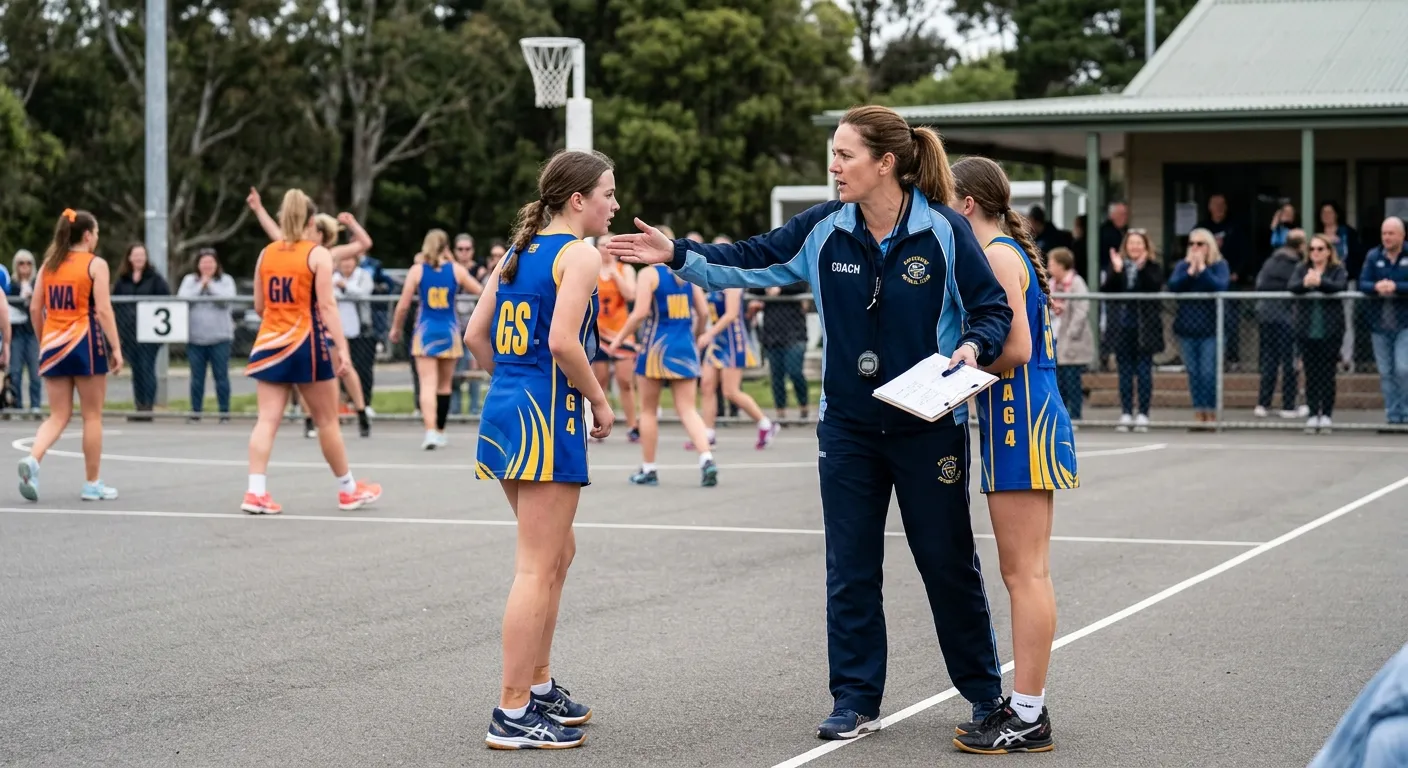
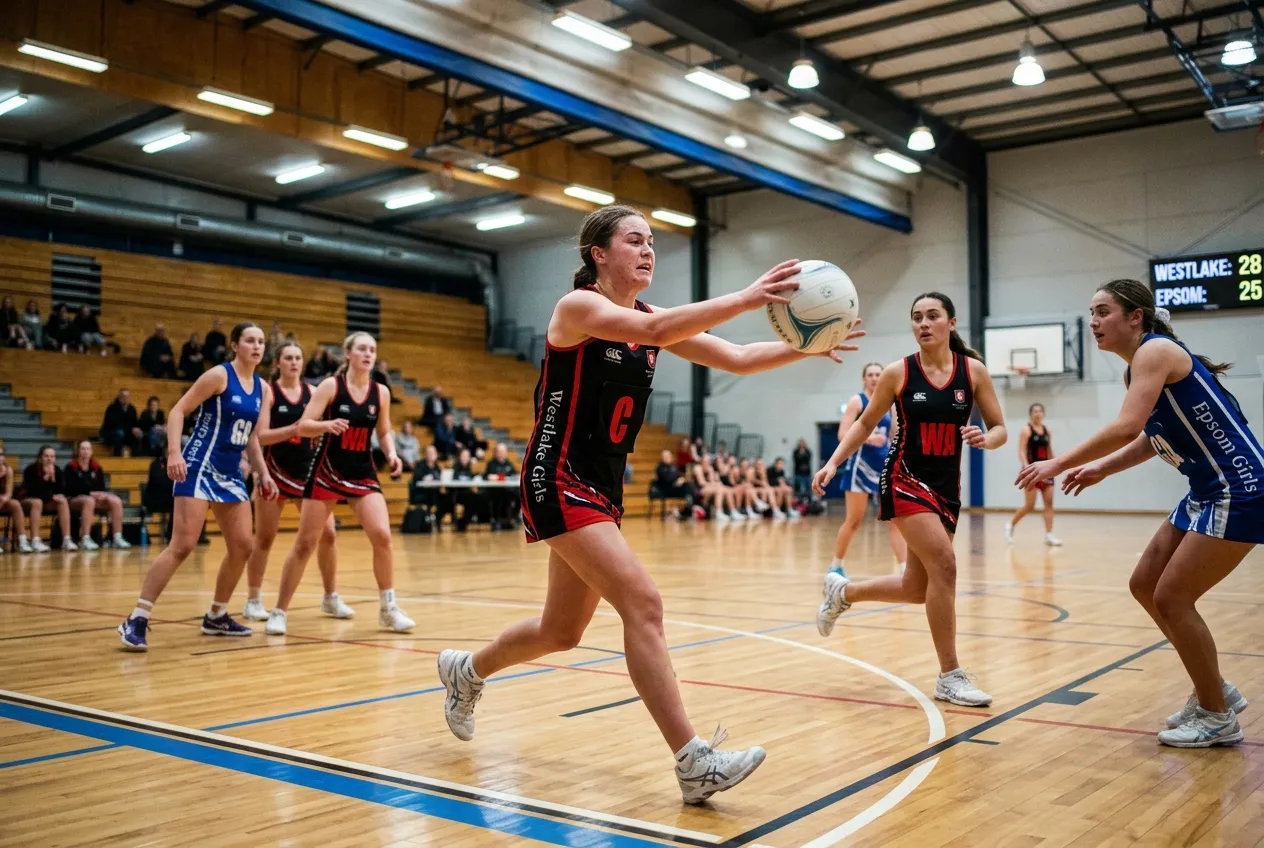
Fair playing time in junior sport
The most common question in grassroots coaching, and the one with the least satisfying answer: it depends on your grade, and the numbers rarely divide evenly.
What counts as fair playing time?
Worth saying plainly: "fair" is a decision, not a fact. Different grades and organisations land in different places, and a Year 3 development grade and a Year 13 representative side are not the same problem. What follows is how to make the decision well rather than what your decision should be.
Why equal time is often mathematically impossible
This is the part that trips coaches up, and it is worth understanding because it turns an argument into a calculation. The number of playing slots in a match is fixed: positions on court × periods. Sharing those between your squad is division, and division does not always come out clean.
| Squad size | Quarters each | Can it be equal? |
|---|---|---|
| 7 players | 4 each | Yes — but nobody ever rests |
| 8 players | 3 or 4 | No — 4 players get 4, 4 get 3 |
| 9 players | 3 or 4 | No — 1 player gets 4, 8 get 3 |
| 10 players | 2 or 3 | No — 8 players get 3, 2 get 2 |
| 14 players | 2 each | Yes — exactly even |
| 15 players | 1 or 2 | No — 13 get 2, 2 get 1 |
The pattern generalises: an even split is only possible when your squad size divides the slot count exactly. Everything else has a remainder, and the remainder is the thing you manage.
How to handle the remainder
Decide the standard before round one
Write down what you are aiming for — "everyone plays at least half, and I rotate who gets the extra quarter" is a complete policy. Tell the parents in week one. Almost every playing-time complaint is really a complaint about not knowing the rule.
Keep the gap to one period
Whatever the remainder is, it should never mean one child plays four quarters while another plays one. If your plan produces a gap of more than a single period, it is the plan that needs changing rather than the squad.
Rotate who carries it, and keep a record
The child who got two quarters this week starts next week. This is the whole ball game, and it is also the part that fails — not through bad intent but because nobody remembers round three by round nine. A record is the only fix.
Split the game into more periods if you need finer control
Four quarters gives you coarse blocks. Eight shorter rotations doubles the slots and halves the unfairness of a remainder. It costs you more substitutions to manage, which is a real trade-off — but it is the single most effective lever you have.
Treat availability as part of fairness
A child who missed two weeks through illness has not had "less than their share" in any meaningful sense. Count from games available, not games played, or you will over-correct.
When unequal time is defensible
There are real reasons to depart from equal time, and pretending otherwise does not help anyone. They tend to be these:
- Grade and age. Competitive secondary and representative grades usually select on merit, and everyone involved knows it. The expectation should be explicit at selection, not discovered in round four.
- Safety. A significant physical mismatch is a legitimate reason to manage someone's minutes. It is also a reason to ask whether the grade is right.
- Attendance and commitment. Plenty of clubs link training attendance to game time. This works if it is stated up front and applied consistently; it is corrosive if it is applied selectively or retrospectively.
- Injury and load. Straightforward, and worth explaining rather than leaving to inference.
What is not defensible is the drift: no stated policy, decisions made in the moment, and a pattern that nobody notices until a parent does. That is the common failure, and it is almost never deliberate.
Work out your own rotation
Free, no account needed
The netball rotation generator, football lineup generator and basketball lineup generator do the arithmetic above for your actual squad, and show you the spread so you can see how even the split is before the game.
They handle one game. If the pattern across a season is what you are worried about — and it should be — that needs a record, which is what Squaddie keeps.
Last reviewed: September 2026
Common questions
How much game time should a child get in junior sport?
In junior and development grades, the common standard is at least half the game for every available player, with equal time as the aim. Many NZ junior competitions set a minimum in their own rules, so check your competition handbook first — it takes precedence over any general guidance.
Is equal playing time always the right approach?
For young age groups and development grades, it is a sound default and the easiest to defend. It becomes less appropriate in competitive secondary and representative sport, where selection on merit is the stated basis. The important thing is that whichever approach applies is known to everyone before the season starts.
What if a child does not come to training?
Linking game time to attendance is a legitimate policy and a common one. It only works if you state it before the season, apply it to everyone, and account for the fact that an eight-year-old does not control whether they get to training. Consider talking to the parent before reducing game time.
How do I keep track of playing time across a season?
A spreadsheet works if you fill it in every single week; most coaches do not, which is the honest reason apps like Squaddie exist. However you do it, the requirement is that the total is in front of you at the moment you pick the lineup, not in a file you consult at the end of the year.
A parent says their child gets less time than others. What do I do?
Start by checking whether they are right — they often are, and usually not because anyone intended it. If you have the numbers, share them. If you do not, say so and start keeping them. <a href="/coaching/parent-communication">Talking to parents about playing time</a> goes into the conversation itself.
Next
Player rotations
Turning a playing-time policy into a rotation you can follow on the sideline.
Talking to parents
Setting expectations so this never becomes a complaint.
Netball rotation generator
Do the maths above for your own squad, free.
Team selection
The decision that happens before playing time even arises.
Make fair game time provable.
Squaddie keeps a running playing-time total per player, so the answer to "has everyone had a fair go?" is a number.
Get started freeFree forever for your first team · No credit card