How to select a junior team fairly
Selection is the decision parents remember longest. Most of the difficulty comes not from the choice itself but from nobody knowing what the choice was based on.
What makes team selection fair?
That is a lower bar than it sounds and most selection disputes fail it. The criteria were in the coach's head, they shifted between trials, and the explanation was assembled after the fact.
A selection process that holds up
Decide what the team is for
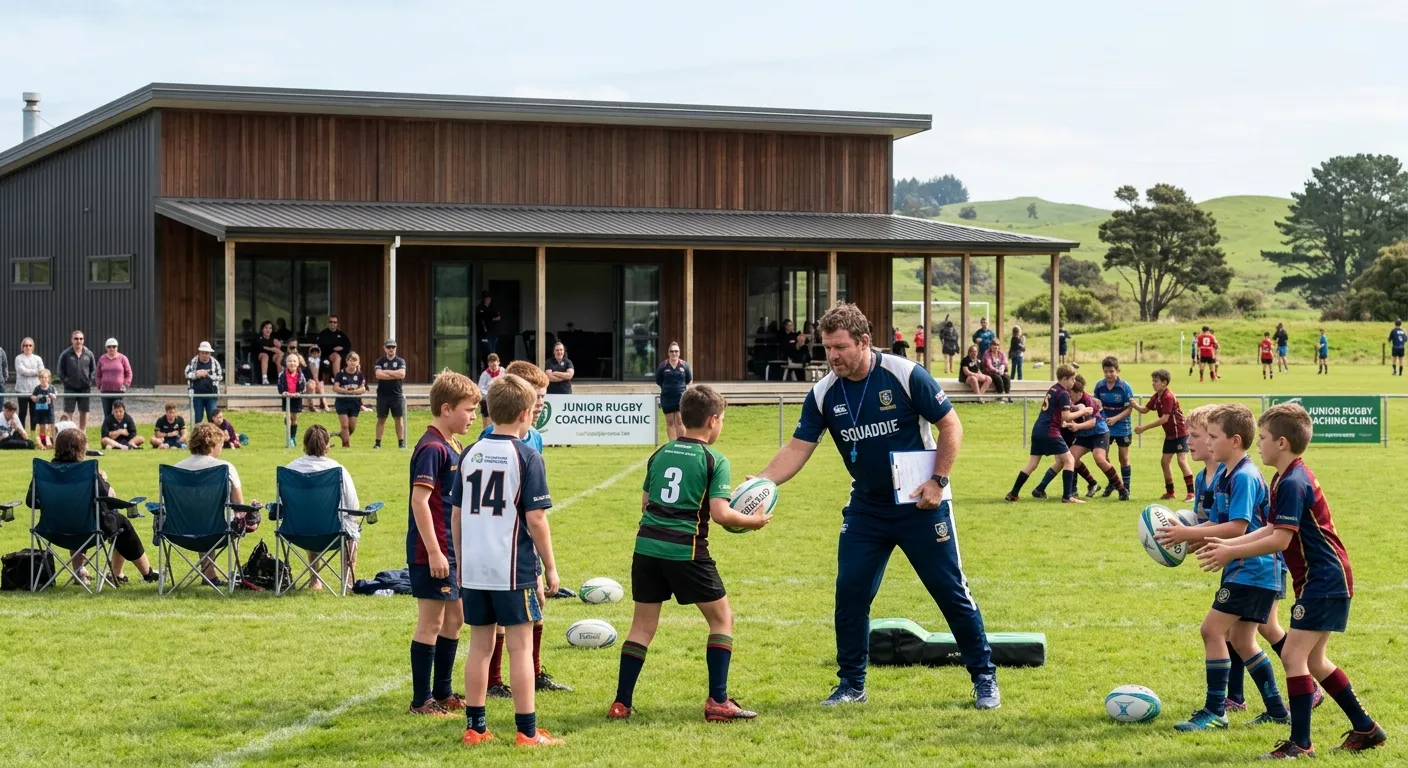
A development side and a competitive side are selected differently, and the honest answer is sometimes "both, and they conflict". Say which one this is. If your club or school has a stated position, start there — see Squaddie for schools on setting a consistent standard across teams.
Publish the criteria before the trial
Four or five, written down, in plain language — skill, positional need, attitude and coachability, attendance. Parents who see the criteria in advance rarely dispute their application afterwards.
Assess more than once, and not only in games
A single trial measures who had a good day. Two or three sessions, including a normal training, gives you something closer to a picture. It also lets a nervous child settle.
Get a second pair of eyes
Anyone with a child trialling should not be the only assessor of that child. This is not about integrity, it is about removing the question. A second coach or a team manager scoring independently makes the outcome much easier to stand behind.
Write down the reason for each decision
One line per player, at the time. You will not reconstruct it accurately three weeks later, and that one line is what turns a difficult conversation into a short one.
Tell people properly
Individually where you can, before any list goes up, and with a specific reason rather than "we had a lot of strong players". For a child who missed out, the useful part is what to work on and when the next opportunity is.
Development versus winning
This is the genuine tension and it does not fully resolve. Some points that help:
- Grade defines the default. In junior and social grades, development is the stated purpose of the competition, so it wins ties. In representative sport, results are the stated purpose. Most disputes happen when the coach is operating on one basis and the parents assume the other.
- They conflict less than people think in the long run. Children who get meaningful game time improve and stay in the sport; children who do not, leave. Over several seasons that is also the stronger team. Within a single Saturday, though, the tension is real — do not pretend otherwise.
- Grading teams beats stacking one. If you have enough players for two sides, two evenly-graded teams generally serve more children better than an A team and a filler team, and it is easier to explain.
- Selection is not the same as playing time. You can select on merit and still rotate fairly within the team you picked. Conflating the two is a common mistake — see fair playing time.
Selecting the matchday side
Week-to-week selection is the same problem in miniature, and it is where an unstated policy does the most quiet damage. Squaddie asks for the basis explicitly — a fair selection weights players who are owed game time, a performance selection weights the strongest available side — so the choice is made on purpose rather than by habit. Whichever you pick, it is recorded, which is what makes a pattern visible before a parent finds it.
Last reviewed: September 2026
Common questions
How do you run a fair trial for a junior team?
Publish the criteria beforehand, assess across at least two sessions rather than one, use more than one assessor where a coach has a child trialling, score against the stated criteria rather than an overall impression, and record a one-line reason per player at the time. Then tell players individually before any list is published.
Should I tell a child why they were not selected?
Yes, and specifically — a vague answer is worse than a hard one. Name one or two things to work on and say when the next opportunity is. Do it in person or by phone to the parent for younger children, rather than by email or a list on a wall.
Is it acceptable to pick the strongest team in junior sport?
It depends on the grade and on what was communicated. In a competitive grade where merit selection is the stated basis, yes. In a development or social grade it usually conflicts with the point of the competition. The failure mode is doing it without having said so.
What if I am coaching my own child?
Extremely common in volunteer sport and not a problem in itself. Reduce the question by having someone else assess your child during selection, being slightly more conservative than you think you need to be about their game time, and keeping the record that lets anyone check. The record is what does the work here.
How many players should a junior squad have?
Enough to cover absences, few enough that everyone gets meaningful game time. For a seven-a-side sport over four quarters, nine to twelve is usually workable; above fourteen, individual game time gets thin unless you rotate in shorter blocks. The <a href="/coaching/player-rotations">rotation guide</a> has the slot maths by sport.
Next
Selection you can stand behind.
Squaddie records the basis for each matchday side, so a pattern is visible to you before it is visible to a parent.
Get started freeFree forever for your first team · No credit card